The Role of AI in Future Skill Development
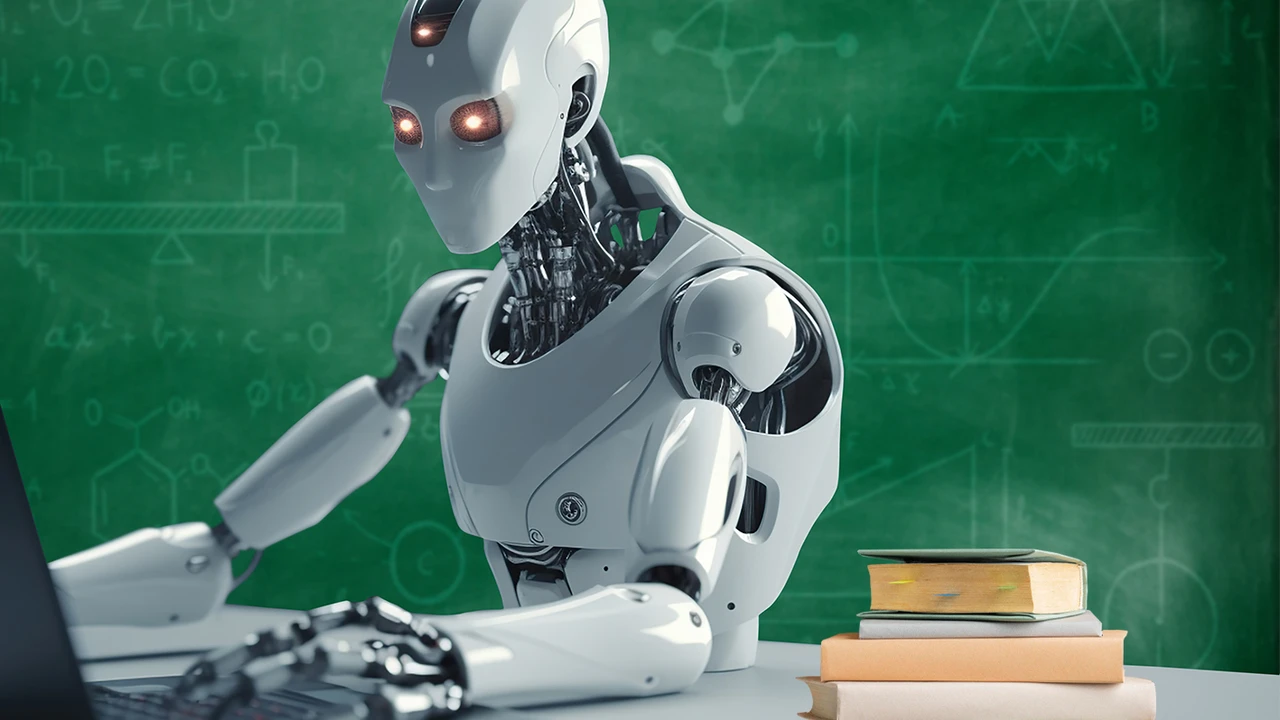
Explore how artificial intelligence is shaping the future of skill development and learning.
Explore how artificial intelligence is shaping the future of skill development and learning.
The Role of AI in Future Skill Development
Hey there! Let's talk about something super exciting and a bit mind-bending: how Artificial Intelligence, or AI, is totally changing the game when it comes to learning new stuff and developing skills. It's not just about robots taking over jobs – far from it! AI is becoming our ultimate learning buddy, making skill development more personalized, efficient, and accessible than ever before. If you're looking to stay ahead in your career, understanding AI's role in learning is absolutely crucial. We're going to dive deep into how AI is transforming education, what tools are out there, and what you should be thinking about to leverage this tech for your own growth.
Think about it: traditional learning often feels like a one-size-fits-all approach. But with AI, it's like having a personal tutor who knows exactly what you need, when you need it, and how you learn best. This isn't just a futuristic dream; it's happening right now, and it's only going to get more sophisticated. So, buckle up, because we're about to explore the fascinating intersection of AI and skill development.
AI Driven Personalized Learning Paths and Skill Acquisition
One of the biggest breakthroughs AI brings to skill development is personalization. Gone are the days of rigid curricula. AI can analyze your current knowledge, learning style, strengths, and weaknesses to create a truly bespoke learning journey. Imagine an AI system that understands you learn better through visual aids, or that you struggle with complex mathematical concepts but excel in creative writing. It can then adapt the content, pace, and even the type of exercises to suit you perfectly. This isn't just about making learning easier; it's about making it more effective and engaging.
For instance, AI-powered platforms can recommend specific courses, articles, or videos based on your career goals and existing skill gaps. They can track your progress in real-time, identify areas where you're struggling, and provide immediate, targeted feedback. This kind of adaptive learning ensures that you're always challenged but never overwhelmed, leading to faster and more profound skill acquisition. It's like having a super-smart coach who's always in your corner, guiding you every step of the way.
Intelligent Tutoring Systems and AI Powered Feedback Mechanisms
Remember those old-school tutoring sessions? Now imagine them supercharged with AI. Intelligent Tutoring Systems (ITS) are AI applications designed to mimic human tutors, providing personalized instruction and support. These systems can answer questions, explain concepts in different ways, and even engage in Socratic dialogue to deepen your understanding. They're particularly effective for subjects that require problem-solving and critical thinking.
Beyond just teaching, AI is revolutionizing feedback. Instead of waiting days for a human to grade your assignment, AI can provide instant, detailed feedback on everything from coding errors to writing style. For example, if you're learning a new programming language, an AI tool can pinpoint exactly where your code went wrong and suggest improvements. If you're practicing public speaking, AI can analyze your tone, pace, and even body language, offering actionable insights to help you improve. This immediate feedback loop is incredibly powerful for accelerating skill development, allowing you to correct mistakes and reinforce correct practices much faster.
Virtual Reality and Augmented Reality Enhanced Learning Experiences
This is where things get really cool! AI, when combined with Virtual Reality (VR) and Augmented Reality (AR), creates immersive learning environments that were once the stuff of science fiction. Imagine practicing complex surgical procedures in a VR simulation, or troubleshooting a sophisticated engine with AR overlays guiding you step-by-step. These technologies allow for hands-on learning in a safe, controlled, and highly realistic environment, without the risks or costs associated with real-world mistakes.
For example, medical students can perform virtual surgeries, pilots can train in highly realistic flight simulators, and engineers can design and test prototypes in a virtual space. AI powers the intelligence behind these simulations, adapting scenarios based on the learner's actions and providing realistic responses. This kind of experiential learning is incredibly effective for developing practical skills, as it bridges the gap between theoretical knowledge and real-world application. It's not just about reading a textbook; it's about doing, experiencing, and learning from your actions in a truly dynamic way.
AI Tools for Language Learning and Communication Skills
Learning a new language or honing your communication skills can be tough, but AI is making it a whole lot easier and more effective. AI-powered language learning apps use sophisticated algorithms to personalize lessons, provide instant pronunciation feedback, and even simulate conversations with AI chatbots. This allows learners to practice speaking and listening in a low-pressure environment, building confidence and fluency much faster than traditional methods.
Let's look at some specific tools:
Duolingo The Gamified Language Learning Platform
Duolingo is probably the most well-known language learning app, and it leverages AI extensively. It uses adaptive learning algorithms to tailor lessons to your progress, focusing on areas where you need more practice. Its speech recognition technology provides instant feedback on your pronunciation, helping you sound more like a native speaker. The gamified approach, with points, streaks, and leaderboards, keeps you motivated. It's free to use with ads, or you can opt for Duolingo Plus for an ad-free experience and offline lessons, typically around $6.99/month. It's fantastic for beginners and intermediate learners who want to build a solid foundation in a new language.
Rosetta Stone Immersive Language Acquisition
Rosetta Stone has been around for a while, but their modern platform is heavily AI-enhanced. They focus on an immersive learning approach, teaching you a new language without translation, much like how you learned your first language. Their TruAccent speech recognition engine is incredibly advanced, providing precise feedback on your pronunciation and intonation. They offer lifetime subscriptions, which can be a bit pricey upfront (often around $199-$299 for all languages), but it's a one-time investment for comprehensive learning. It's great for those who prefer an immersive, structured learning experience and are serious about achieving fluency.
ELSA Speak AI Powered Pronunciation Coach
ELSA Speak is specifically designed to help non-native English speakers improve their pronunciation and speaking fluency. It uses advanced AI to analyze your speech patterns, identify specific pronunciation errors, and provide targeted exercises to correct them. It breaks down words into individual sounds and gives you visual feedback on your tongue and mouth positions. It's incredibly precise and effective for refining your accent. ELSA Speak offers a free version with limited features, and a Pro subscription for full access, usually around $11.99/month or $79.99/year. If you're looking to perfect your English pronunciation for professional settings, ELSA Speak is a game-changer.
ChatGPT and Other Large Language Models for Practice
While not specifically a language learning app, tools like ChatGPT (and other large language models like Google Bard or Microsoft Copilot) are incredible for practicing communication skills. You can have free-form conversations with them in any language, ask for explanations of grammar rules, request vocabulary lists, or even role-play different scenarios (like a job interview or a business negotiation). The beauty is that you get instant, non-judgmental practice. ChatGPT's basic version is free, while ChatGPT Plus (for GPT-4 access) is $20/month. This is an excellent supplementary tool for practicing conversational fluency and getting immediate feedback on your written communication.
AI in Content Creation and Curriculum Development
AI isn't just helping us learn; it's also helping to create the learning materials themselves. AI tools can assist in generating course content, quizzes, and even entire curricula. This can significantly speed up the development of new educational programs, making learning resources more readily available and up-to-date. For example, AI can analyze vast amounts of data to identify emerging trends and skills in demand, then help educators design courses that directly address those needs.
Furthermore, AI can personalize content delivery. Imagine an AI system that can rephrase complex explanations in simpler terms if it detects a learner is struggling, or provide additional examples based on their specific industry or interests. This dynamic content generation ensures that learning materials are always relevant and tailored to the individual, making the learning process more efficient and effective for everyone involved.
Ethical Considerations and Future Outlook of AI in Learning
Of course, with all this amazing potential, there are also important ethical considerations. Data privacy is a big one: AI systems collect a lot of data about learners, so ensuring that this data is used responsibly and securely is paramount. There's also the question of bias in AI algorithms; if the data used to train AI systems is biased, it could lead to unfair or inaccurate learning experiences. We need to be mindful of these challenges and work towards developing AI in education that is fair, transparent, and equitable for all.
Looking ahead, the future of AI in skill development is incredibly bright. We're likely to see even more sophisticated personalized learning experiences, hyper-realistic simulations, and AI tutors that can understand and respond to human emotions. AI will continue to democratize education, making high-quality learning accessible to people all over the world, regardless of their location or socioeconomic status. It's an exciting time to be a learner, and by embracing AI, we can unlock unprecedented opportunities for personal and professional growth. So, keep an eye on this space, because the way we learn is evolving faster than ever before, and AI is at the heart of it all!
:max_bytes(150000):strip_icc()/277019-baked-pork-chops-with-cream-of-mushroom-soup-DDMFS-beauty-4x3-BG-7505-5762b731cf30447d9cbbbbbf387beafa.jpg)