Maximizing Your Energy Levels Throughout the Day
Learn how to manage your energy levels to sustain productivity and focus throughout your workday.
Learn how to manage your energy levels to sustain productivity and focus throughout your workday.
Maximizing Your Energy Levels Throughout the Day
Ever feel like you hit a wall around 2 PM? Or maybe you wake up feeling sluggish, even after a full night's sleep? You're not alone. In today's fast-paced work environment, maintaining consistent energy levels throughout the day is a huge challenge for many professionals. It's not just about getting enough sleep; it's about how you manage your physical, mental, and emotional energy. Think of your energy as a finite resource, much like money in a bank account. You make deposits and withdrawals throughout the day, and if you're constantly overdrawing, you'll end up in an energy deficit. This article is all about helping you understand how to make smart energy investments and avoid those dreaded energy crashes, keeping you productive and focused from your first coffee to your last email.
Understanding Your Energy Cycles and Circadian Rhythms
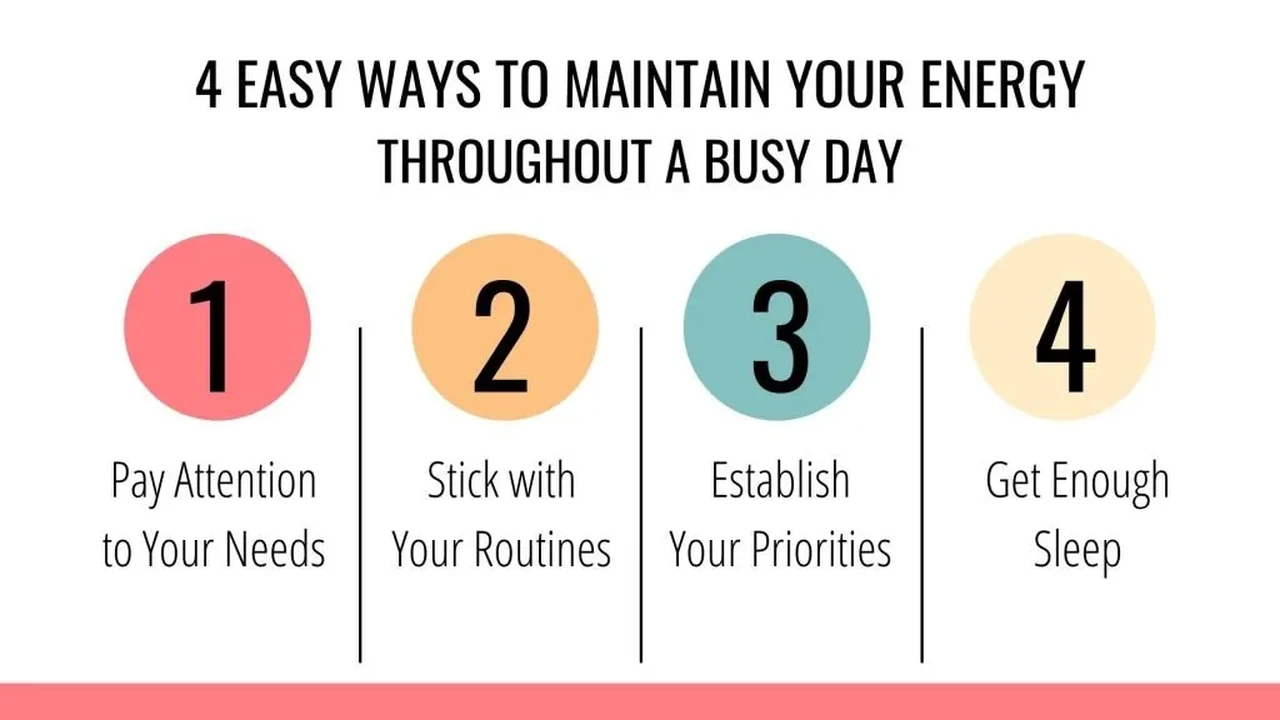
First things first, let's talk about your body's natural rhythms. We all have an internal clock, known as our circadian rhythm, which dictates our sleep-wake cycle and influences our energy levels. Understanding your personal chronotype – whether you're a morning lark, a night owl, or somewhere in between – can be incredibly helpful. Morning larks typically feel most energetic in the early hours, while night owls might find their peak productivity later in the day. Trying to force yourself into a schedule that goes against your natural rhythm is a surefire way to deplete your energy. Pay attention to when you naturally feel most alert and when you tend to dip. This self-awareness is the first step to optimizing your energy management.
Nutrition and Hydration Fueling Your Productivity
What you put into your body directly impacts your energy. It's not rocket science, but it's often overlooked. Think of your body as a high-performance machine; it needs the right fuel to run efficiently. Sugary snacks and highly processed foods might give you a quick burst, but they're followed by an inevitable crash. Instead, focus on complex carbohydrates, lean proteins, and healthy fats. These provide a sustained release of energy. Think oatmeal for breakfast, a salad with grilled chicken for lunch, and nuts or fruit for snacks. And hydration? Absolutely critical. Even mild dehydration can lead to fatigue, headaches, and reduced cognitive function. Keep a water bottle handy and sip throughout the day. Aim for at least 8 glasses of water, more if you're active or in a warm climate.
Movement and Exercise Boosting Your Vitality
It might seem counterintuitive, but expending energy through exercise actually boosts your overall energy levels. Regular physical activity improves cardiovascular health, increases stamina, and even enhances your mood. You don't need to run a marathon every day. Even short bursts of activity can make a big difference. A 10-minute walk during your lunch break, taking the stairs instead of the elevator, or doing some quick stretches at your desk can help. If you can fit in a more vigorous workout a few times a week, even better. Exercise also helps you sleep better, which brings us to our next point.
Sleep Quality and Rest Restoring Your Reserves
This is probably the most obvious, yet often neglected, aspect of energy management. Quality sleep is non-negotiable for sustained energy and cognitive function. Most adults need 7-9 hours of sleep per night. But it's not just about quantity; quality matters too. Create a consistent sleep schedule, even on weekends. Make your bedroom a sleep sanctuary: dark, quiet, and cool. Avoid screens an hour before bed, and limit caffeine and heavy meals in the evening. If you're struggling with sleep, consider a sleep tracker to identify patterns, or even consult a doctor. Naps can also be a powerful tool for energy restoration, but keep them short (20-30 minutes) to avoid grogginess.
Stress Management and Mental Well-being Sustaining Focus
Mental and emotional energy are just as important as physical energy. Chronic stress is an enormous energy drain. It can lead to burnout, fatigue, and reduced productivity. Developing effective stress management techniques is crucial. This could include mindfulness meditation, deep breathing exercises, yoga, or simply taking regular breaks to clear your head. Prioritize your tasks to avoid feeling overwhelmed. Learn to say no to commitments that overextend you. Spending time on hobbies or with loved ones can also recharge your emotional batteries. Remember, your brain needs downtime just like your body does.
Optimizing Your Workspace and Environment Enhancing Efficiency
Your physical environment plays a significant role in your energy levels and focus. A cluttered, disorganized workspace can be mentally draining. Take a few minutes each day to tidy up. Ensure you have adequate lighting, preferably natural light, which can boost mood and alertness. Consider ergonomic furniture to prevent physical discomfort, which can also sap your energy. Temperature and air quality also matter. A stuffy, warm room can make you feel sluggish. Open a window if you can, or use a fan. Even small changes to your environment can have a big impact on your daily energy.
Technology Tools for Energy Management and Productivity
In today's digital age, there are numerous tools that can help you manage your energy and boost productivity. These aren't magic bullets, but they can certainly assist in creating better habits and tracking your progress. Here are a few categories and specific product recommendations:
Sleep Tracking Devices and Apps for Restful Nights
Understanding your sleep patterns is the first step to improving them. These devices can track sleep stages, heart rate, and even breathing disturbances, giving you actionable insights.
- Oura Ring: This sleek smart ring tracks sleep, activity, and recovery. It provides a daily 'Readiness Score' based on your sleep and activity, guiding you on how much energy you have for the day. It's comfortable to wear and offers detailed insights into your sleep architecture. The Oura Ring Gen3 starts at around $299, plus a monthly membership fee for full features. It's great for those who want comprehensive, passive tracking without wearing a watch to bed.
- Whoop Strap: Similar to Oura, Whoop focuses heavily on recovery and sleep. It's a wrist-worn strap that tracks heart rate variability, sleep stages, and strain from daily activities. It gives you a daily 'Recovery Score' to help you understand your body's readiness. Whoop operates on a subscription model, typically starting around $30/month, with the strap included. Ideal for athletes or anyone serious about optimizing recovery and performance.
- Sleep Cycle App: If you're not ready for a dedicated device, this app uses your phone's microphone or accelerometer to analyze your sleep and wake you up during your lightest sleep phase, making waking up feel more natural. It also tracks snoring and sleep talking. It has a free version with basic features, and a premium subscription (around $30/year) for advanced analytics and features. It's a cost-effective way to start understanding your sleep.
Mindfulness and Meditation Apps for Mental Clarity
These apps can help you reduce stress, improve focus, and recharge your mental energy through guided meditation and mindfulness exercises.
- Calm: One of the most popular meditation apps, Calm offers guided meditations for sleep, stress, and focus, as well as sleep stories and masterclasses. It's user-friendly and has a wide variety of content. A premium subscription is typically around $70/year or $400 for a lifetime. It's excellent for beginners and experienced meditators alike.
- Headspace: Another leading app, Headspace focuses on making meditation accessible and understandable. It offers themed courses on topics like stress, anxiety, and focus, with a playful and engaging approach. A premium subscription is usually around $70/year. Great for those who prefer a more structured, progressive learning path for meditation.
- Insight Timer: This app boasts the largest free library of guided meditations (over 100,000) from thousands of teachers. It also includes meditation timers, sleep music, and talks. While it has a premium subscription (around $60/year) for offline access and advanced courses, its free content is incredibly robust. Perfect for those who want a vast selection and a strong community aspect.
Productivity and Focus Apps for Efficient Workflows
These tools help you manage tasks, block distractions, and ensure you're using your energy on what truly matters.
- Forest: This app uses a gamified approach to help you stay focused. When you want to focus, you plant a virtual tree. If you leave the app before your timer is up, your tree dies. It's a simple yet effective way to encourage deep work. It's a one-time purchase (around $4) on mobile, with a free Chrome extension. Ideal for those who struggle with phone distractions.
- Todoist: A powerful and flexible task manager that helps you organize your to-dos, projects, and deadlines. By getting tasks out of your head and into a reliable system, you free up mental energy. It has a free version with basic features, and a Pro version (around $4/month) for advanced features like reminders and filters. Excellent for anyone needing a robust task management system.
- RescueTime: This app runs in the background of your computer and mobile devices, tracking how you spend your time on various applications and websites. It provides detailed reports and can even block distracting sites. Understanding where your time (and thus energy) goes is crucial for optimization. It offers a free Lite version and a Premium version (around $9/month) for more detailed insights and blocking features. Great for identifying and eliminating time sinks.
Ergonomic Accessories for Physical Comfort and Energy
While not apps, these physical products directly impact your physical energy by preventing discomfort and promoting better posture.
- Ergonomic Office Chair (e.g., Herman Miller Aeron): A good chair provides proper lumbar support and encourages healthy posture, reducing back pain and fatigue. While high-end chairs like the Herman Miller Aeron can be expensive (starting around $1,500), there are many more affordable ergonomic options available from brands like Secretlab or Autonomous. Investing in a good chair is an investment in your long-term physical energy.
- Standing Desk (e.g., FlexiSpot, Uplift Desk): Alternating between sitting and standing throughout the day can significantly reduce fatigue and improve circulation. Many electric standing desks are now available at various price points, from around $200 for basic models to $800+ for premium ones. Brands like FlexiSpot and Uplift Desk offer reliable options.
- Blue Light Blocking Glasses (e.g., Felix Gray, Zenni Optical): Prolonged exposure to blue light from screens, especially in the evening, can disrupt your sleep cycle and strain your eyes, leading to fatigue. These glasses filter out harmful blue light. Prices vary widely, from $20 for basic pairs to $100+ for stylish, high-quality options.
Putting It All Together Your Energy Management Plan
Maximizing your energy levels isn't about finding one magic solution; it's about integrating multiple healthy habits into your daily routine. Start small. Pick one or two areas from this guide that resonate most with you and focus on making consistent improvements. Maybe it's committing to a consistent sleep schedule, or perhaps it's incorporating a 15-minute walk into your lunch break. Track your progress and notice how these changes impact your energy. Be patient with yourself; building new habits takes time. The goal is to create a sustainable lifestyle that supports your physical, mental, and emotional well-being, allowing you to show up as your best self, both at work and in life. Remember, consistent energy isn't just about getting more done; it's about feeling better and enjoying your day more.
:max_bytes(150000):strip_icc()/277019-baked-pork-chops-with-cream-of-mushroom-soup-DDMFS-beauty-4x3-BG-7505-5762b731cf30447d9cbbbbbf387beafa.jpg)