The Ultimate Guide to Upskilling and Reskilling
A comprehensive guide to understanding and implementing upskilling and reskilling for career longevity.
A comprehensive guide to understanding and implementing upskilling and reskilling for career longevity.
The Ultimate Guide to Upskilling and Reskilling for Career Longevity
Understanding Upskilling and Reskilling What's the Difference
Alright, let's get straight to it. You've probably heard these terms thrown around a lot lately: upskilling and reskilling. They sound similar, right? And in a way, they are both about learning and growing. But there's a crucial distinction, especially when you're thinking about your career trajectory, whether you're in the US or Southeast Asia.
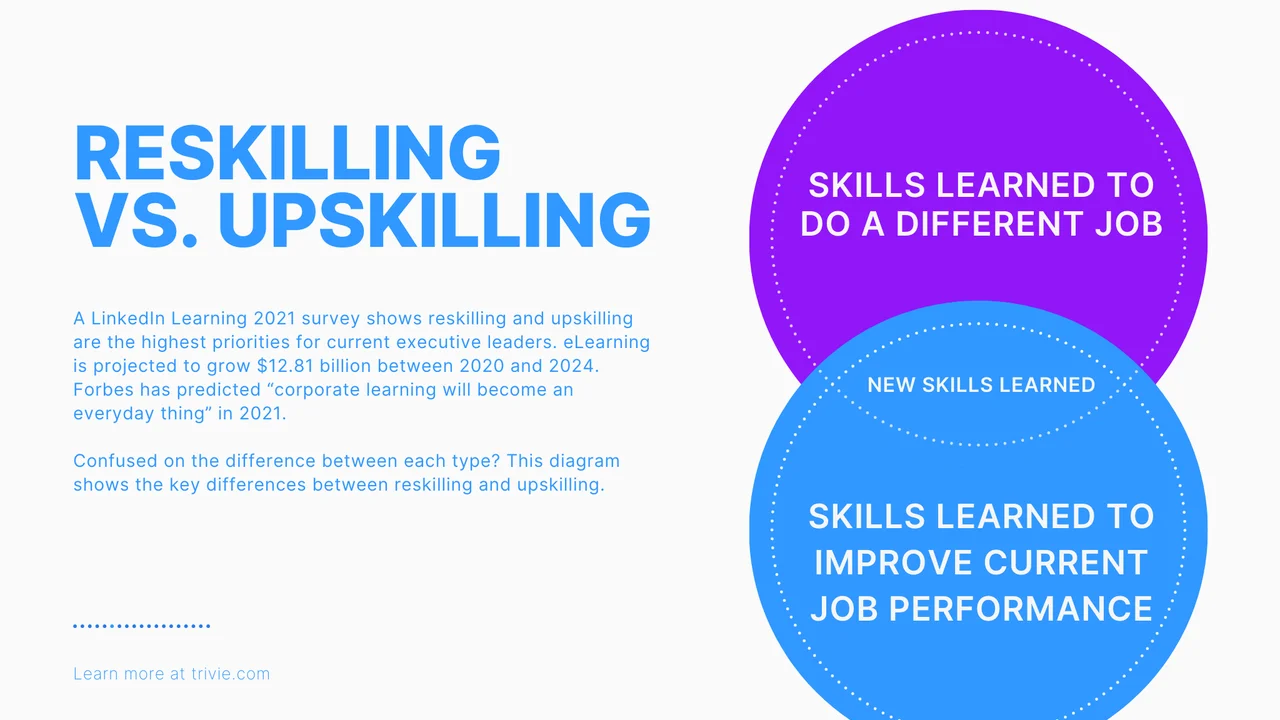
Upskilling is essentially about enhancing your current skillset. Think of it as deepening your expertise in your existing role or field. You're already good at something, and upskilling makes you even better, more efficient, or more specialized. For example, if you're a digital marketer, upskilling might involve learning advanced SEO techniques, mastering new analytics tools, or diving deep into AI-driven content creation. It's about staying competitive and relevant in your current lane.
Reskilling, on the other hand, is about learning entirely new skills to transition into a different role or even a new industry. This usually happens when your current job is at risk due to automation, technological shifts, or market changes, or simply because you want a complete career change. If you're a factory worker whose job is being automated, reskilling might mean learning to code or becoming a data analyst. It's about pivoting, adapting, and opening up entirely new career paths.
Both are vital in today's fast-paced job market. The world is changing at an incredible speed, and what was relevant yesterday might be obsolete tomorrow. So, whether you're looking to climb the ladder in your current field or jump ship to something completely new, understanding these concepts is your first step.
Why Upskill and Reskill The Imperative for Career Growth and Stability
So, why bother? Why invest your precious time and energy into learning new things when you're already busy with work, life, and everything in between? Well, the answer is simple: career growth, stability, and future-proofing. This isn't just about getting a raise; it's about ensuring you have a job in five, ten, or even twenty years.
The Pace of Technological Change and Job Market Evolution
Technology isn't just advancing; it's accelerating. AI, automation, big data, blockchain – these aren't just buzzwords anymore; they're fundamentally reshaping industries. Jobs that exist today might not exist tomorrow, and new jobs are emerging that we can't even imagine yet. If you're not continuously learning, you're falling behind. This is particularly true in tech-heavy markets like the US and rapidly developing economies in Southeast Asia.
Increased Earning Potential and Career Advancement Opportunities
Let's talk money. When you acquire new, in-demand skills, your value in the job market skyrockets. Upskilling can lead to promotions, higher salaries, and more responsibilities within your current company. Reskilling can open doors to entirely new, often higher-paying, industries. Companies are willing to pay a premium for talent that can navigate complex technological landscapes and bring new capabilities to the table.
Enhanced Job Security and Adaptability
In an uncertain economic climate, job security is paramount. The more skills you have, and the more adaptable you are, the more secure your position becomes. If one industry takes a hit, your diverse skillset might allow you to seamlessly transition to another. It's like having multiple keys to different doors – if one door closes, you have others to open.
Personal Growth and Professional Fulfillment
Beyond the practical benefits, there's a huge personal upside. Learning new things keeps your mind sharp, boosts your confidence, and can lead to a greater sense of professional fulfillment. It's incredibly satisfying to master a new skill or successfully pivot your career. It keeps things exciting and prevents stagnation.
Identifying Your Upskilling and Reskilling Needs Strategic Skill Assessment
Okay, you're convinced. But where do you even start? The world of skills is vast, and you can't learn everything. The key is to be strategic. This involves a bit of self-reflection and market research.
Assessing Your Current Skills and Career Goals
First, take stock of what you already know. What are your strengths? What are your weaknesses? What do you enjoy doing? What kind of work truly energizes you? Then, think about your career goals. Do you want to be a manager? A specialist? Do you dream of starting your own business? Your goals will dictate the skills you need to acquire.
Researching Industry Trends and Future Job Market Demands
This is where the market research comes in. Look at job postings in your desired field or industry. What skills are consistently being requested? What technologies are emerging? Websites like LinkedIn, Indeed, and even industry-specific forums can give you a good pulse on what's hot. For the US market, look at reports from the Bureau of Labor Statistics. For Southeast Asia, keep an eye on government initiatives and tech hubs like Singapore and Vietnam.
Identifying Skill Gaps and High-Demand Skills
Once you know where you are and where you want to go, you can identify the gaps. These are the skills you need to bridge to reach your goals. Prioritize high-demand skills – those that are scarce but highly valued by employers. Think about skills that are transferable across industries, like data analysis, project management, or digital literacy.
Top Platforms and Resources for Upskilling and Reskilling Your Learning Toolkit
Now for the fun part: where do you actually go to learn these new skills? The good news is, there are more resources available than ever before, many of them affordable or even free. Here are some of the best, with a focus on their strengths, typical pricing, and ideal use cases.
Online Learning Platforms Comprehensive Skill Development
These are your go-to for structured courses, often with certifications. They offer a wide range of subjects, from coding to creative arts, and are generally self-paced, making them flexible for busy professionals.
Coursera
Overview: Coursera partners with universities and companies worldwide to offer courses, specializations, and even full degrees. You can find everything from a single course on Python to a Master's in Data Science from a top university. Many courses offer financial aid or can be audited for free (meaning you can access course materials but won't get a certificate).
Ideal for: Structured learning, university-level content, professional certificates, and even degrees. Great for those who want a recognized credential.
Typical Pricing: Individual courses range from $39-$99 for a certificate. Specializations (a series of courses) can be $39-$79 per month. Full degrees are significantly more, comparable to traditional university tuition.
Use Case Example: If you're a marketing professional looking to upskill in data analytics, you could take the 'Google Data Analytics Professional Certificate' specialization. It covers SQL, R, Tableau, and more, and is highly recognized.
edX
Overview: Similar to Coursera, edX offers university-level courses from institutions like Harvard, MIT, and Berkeley. It focuses heavily on STEM fields but also has strong offerings in business, humanities, and more. Like Coursera, many courses can be audited for free, with a fee for verified certificates.
Ideal for: Academic rigor, STEM subjects, free auditing options, and micro-credentials (MicroMasters, Professional Certificates).
Typical Pricing: Verified certificates typically range from $50-$300 per course. MicroMasters programs can be $1,000-$2,000+.
Use Case Example: If you're an engineer looking to reskill into AI, you might consider the 'Professional Certificate in Data Science' from Harvard University on edX, which covers machine learning and statistics.
Udemy
Overview: Udemy is a marketplace for online courses, taught by independent instructors. This means a huge variety of topics and teaching styles. While quality can vary, there are many excellent courses, often at very affordable prices during sales. It's less about formal accreditation and more about practical, hands-on learning.
Ideal for: Practical skills, niche topics, affordable learning, and self-paced study without strict deadlines.
Typical Pricing: Courses are often priced between $19.99 and $199.99, but frequent sales can drop prices to $9.99-$15.99.
Use Case Example: If you're looking to quickly pick up a new software skill like Adobe Photoshop or learn the basics of web development (HTML/CSS), Udemy offers numerous beginner-friendly courses.
Coding Bootcamps and Specialized Programs Intensive Skill Acquisition
For those looking for a rapid, immersive reskilling experience, especially into tech roles, bootcamps are a popular choice. They are intensive but can get you job-ready in a matter of months.
General Assembly
Overview: General Assembly offers immersive, full-time, and part-time courses in high-demand fields like web development, data science, UX design, and digital marketing. They have campuses in major cities globally (including the US and some in Southeast Asia like Singapore) and also offer online programs. Known for career support and job placement assistance.
Ideal for: Career changers, intensive learning, hands-on projects, and strong career services.
Typical Pricing: Full-time immersive bootcamps can range from $10,000 to $17,000+. Part-time courses are generally less, around $3,000-$5,000.
Use Case Example: If you're looking to reskill from a non-tech background into a software engineering role, their 'Software Engineering Immersive' program is designed to get you job-ready in 12 weeks.
Le Wagon
Overview: Le Wagon is a global coding bootcamp with a strong presence in Europe, Asia (including Singapore, Bali, Tokyo), and some US cities. They focus on web development and data science, emphasizing practical skills and building a portfolio. They have a strong community and alumni network.
Ideal for: Aspiring developers and data scientists, international exposure, strong community, and practical project-based learning.
Typical Pricing: Full-time bootcamps are typically in the range of $6,000-$8,000 USD, varying by location.
Use Case Example: If you're in Southeast Asia and want to become a full-stack web developer quickly, Le Wagon's Web Development bootcamp in Bali or Singapore could be a great option.
Free and Low-Cost Resources Accessible Learning
You don't always need to spend a fortune to learn. Many high-quality resources are available for free or at a very low cost.
YouTube
Overview: A treasure trove of tutorials, lectures, and how-to guides on virtually any topic. Many professionals and educators share their knowledge for free. Quality varies, but channels like FreeCodeCamp, The Net Ninja, and CrashCourse offer excellent educational content.
Ideal for: Quick tutorials, visual learners, exploring new topics, and supplementing other learning.
Typical Pricing: Free.
Use Case Example: Want to understand the basics of blockchain or learn a new Excel function? A quick YouTube search will yield countless videos.
Khan Academy
Overview: A non-profit educational organization offering free courses in a wide range of subjects, primarily focused on K-12 and early college-level content, but also includes some computer programming, economics, and personal finance. Excellent for foundational knowledge.
Ideal for: Building foundational knowledge, refreshing basics, and learning core concepts in various subjects.
Typical Pricing: Free.
Use Case Example: If you're looking to brush up on your statistics before diving into data science, Khan Academy offers comprehensive, easy-to-understand modules.
LinkedIn Learning
Overview: Formerly Lynda.com, LinkedIn Learning offers thousands of video courses taught by industry experts. It covers business, creative, and technology topics. It's integrated with LinkedIn profiles, allowing you to easily showcase completed courses.
Ideal for: Professional development, soft skills, software tutorials, and integration with your professional network.
Typical Pricing: Subscription-based, usually around $29.99/month or $19.99/month if billed annually. Often offers a free trial.
Use Case Example: If you're a manager looking to improve your leadership skills or learn a new project management software, LinkedIn Learning has extensive libraries for these topics.
Industry-Specific Certifications and Vendor Training Specialized Expertise
For certain fields, specific certifications are highly valued and can significantly boost your career prospects.
Google Certifications
Overview: Google offers various professional certifications in areas like IT Support, Data Analytics, Project Management, UX Design, and Digital Marketing. These are highly practical and designed to get you job-ready for entry-level roles. Often available on Coursera.
Ideal for: Entry-level roles in tech, practical skills, and recognized credentials from a major tech company.
Typical Pricing: Included with a Coursera subscription (around $39-$49/month) or a one-time fee for the full program.
Use Case Example: If you want to get into IT, the 'Google IT Support Professional Certificate' is a fantastic starting point, covering troubleshooting, networking, operating systems, and security.
AWS Certifications
Overview: Amazon Web Services (AWS) offers a range of certifications for cloud computing professionals, from foundational to specialty levels. These are crucial for anyone working with cloud infrastructure, development, or operations.
Ideal for: Cloud computing professionals, IT infrastructure roles, and those looking to specialize in AWS technologies.
Typical Pricing: Certification exams range from $100 (Foundational) to $300 (Professional/Specialty). Training courses are extra, often provided by third parties or AWS itself.
Use Case Example: If you're a software developer looking to move into cloud architecture, obtaining an 'AWS Certified Solutions Architect – Associate' certification is a key step.
Microsoft Certifications
Overview: Microsoft offers a vast array of certifications covering their products and technologies, including Azure (cloud), Microsoft 365, Dynamics 365, and various developer and data roles. These are highly valued in enterprise environments.
Ideal for: IT professionals, developers, and data specialists working with Microsoft technologies, and those in enterprise IT environments.
Typical Pricing: Exams typically cost around $165 USD. Training courses vary widely, from free online modules to paid instructor-led training.
Use Case Example: If your company uses Microsoft Azure extensively, getting an 'Azure Administrator Associate' certification can significantly boost your career within that ecosystem.
Strategies for Effective Learning and Skill Application Maximizing Your Investment
Just signing up for a course isn't enough. To truly benefit from upskilling and reskilling, you need effective learning strategies.
Setting Realistic Goals and Creating a Learning Plan
Don't try to learn everything at once. Break down your learning into manageable chunks. Set SMART goals (Specific, Measurable, Achievable, Relevant, Time-bound). Create a realistic learning schedule and stick to it. Consistency is key.
Active Learning and Project-Based Application
Passive learning (just watching videos or reading) is not enough. You need to actively engage with the material. Take notes, ask questions, and most importantly, apply what you learn. Work on personal projects, contribute to open-source initiatives, or volunteer your new skills. This builds your portfolio and solidifies your understanding.
Networking and Mentorship for Accelerated Growth
Connect with others who are learning the same skills or who are already experts in the field. Join online communities, attend webinars, or find a mentor. Networking can provide valuable insights, support, and even job opportunities. A mentor can guide you, offer advice, and help you navigate challenges.
Continuous Learning and Adaptability Mindset
Upskilling and reskilling aren't one-time events; they're a continuous journey. The most successful professionals have a growth mindset – they embrace challenges, learn from failures, and are always curious. Cultivate this mindset, and you'll be well-equipped for whatever the future holds.
Overcoming Challenges in Your Learning Journey Common Hurdles and Solutions
Let's be real, learning new things, especially while juggling work and life, isn't always easy. You'll face challenges, but knowing how to tackle them makes all the difference.
Time Management and Prioritization
This is probably the biggest hurdle. You're busy. Solution: Schedule your learning time like any other important appointment. Even 30 minutes a day adds up. Use productivity techniques like the Pomodoro Technique. Prioritize what's most important for your career goals.
Staying Motivated and Avoiding Burnout
Learning can be tough, and it's easy to lose steam. Solution: Set small, achievable milestones and celebrate your progress. Find a learning buddy. Remind yourself of your 'why' – your career goals, increased earning potential, or personal fulfillment. Take breaks when you need them.
Financial Investment and Resource Allocation
Some courses and bootcamps can be expensive. Solution: Explore free resources first. Look for scholarships or financial aid. Consider employer-sponsored training programs. Many platforms offer payment plans. Remember, it's an investment in yourself and your future.
Dealing with Imposter Syndrome and Self-Doubt
It's common to feel like you're not good enough or that you don't belong, especially when learning something completely new. Solution: Acknowledge these feelings but don't let them paralyze you. Focus on your progress, not perfection. Remember that everyone starts somewhere. Celebrate small wins and remind yourself of how far you've come.
The Future of Work and Your Role in It Embracing Lifelong Learning
The concept of a single career path for life is largely a thing of the past. The future of work is dynamic, fluid, and constantly evolving. Your ability to adapt, learn, and grow will be your most valuable asset.
Embracing lifelong learning isn't just about staying employed; it's about thriving. It's about being curious, resilient, and open to new possibilities. Whether you're upskilling to become a master in your current domain or reskilling to embark on an entirely new adventure, the journey of continuous learning will empower you to shape your own future, no matter where you are in the world.
So, go forth, learn something new, and accelerate your career. The tools are out there, and the future is yours to build.
:max_bytes(150000):strip_icc()/277019-baked-pork-chops-with-cream-of-mushroom-soup-DDMFS-beauty-4x3-BG-7505-5762b731cf30447d9cbbbbbf387beafa.jpg)