Learn how to set realistic and impactful goals for your business or side hustle.
Learn how to set realistic and impactful goals for your business or side hustle. This comprehensive guide will walk you through the process of defining clear, measurable, achievable, relevant, and time-bound (SMART) goals, providing practical examples and recommending tools to help you track your progress and ensure success.
Setting Achievable Goals for Your Business
Understanding Goal Setting Fundamentals for Entrepreneurs
Goal setting is the compass that guides your business or side hustle. Without clear, well-defined objectives, you're essentially sailing without a map, drifting wherever the winds may take you. For entrepreneurs, this isn't just about having a 'good idea' or 'making money'; it's about strategic planning, resource allocation, and ultimately, sustainable growth. The fundamental principle behind effective goal setting is clarity. You need to know precisely what you want to achieve, why it matters, and how you plan to get there. This clarity empowers you to make informed decisions, prioritize tasks, and measure your progress effectively. It also serves as a powerful motivator, keeping you focused and resilient when faced with challenges. Think of your goals as milestones on a journey. Each milestone achieved brings you closer to your ultimate destination, providing a sense of accomplishment and reinforcing your commitment.
The Power of SMART Goals for Business Growth
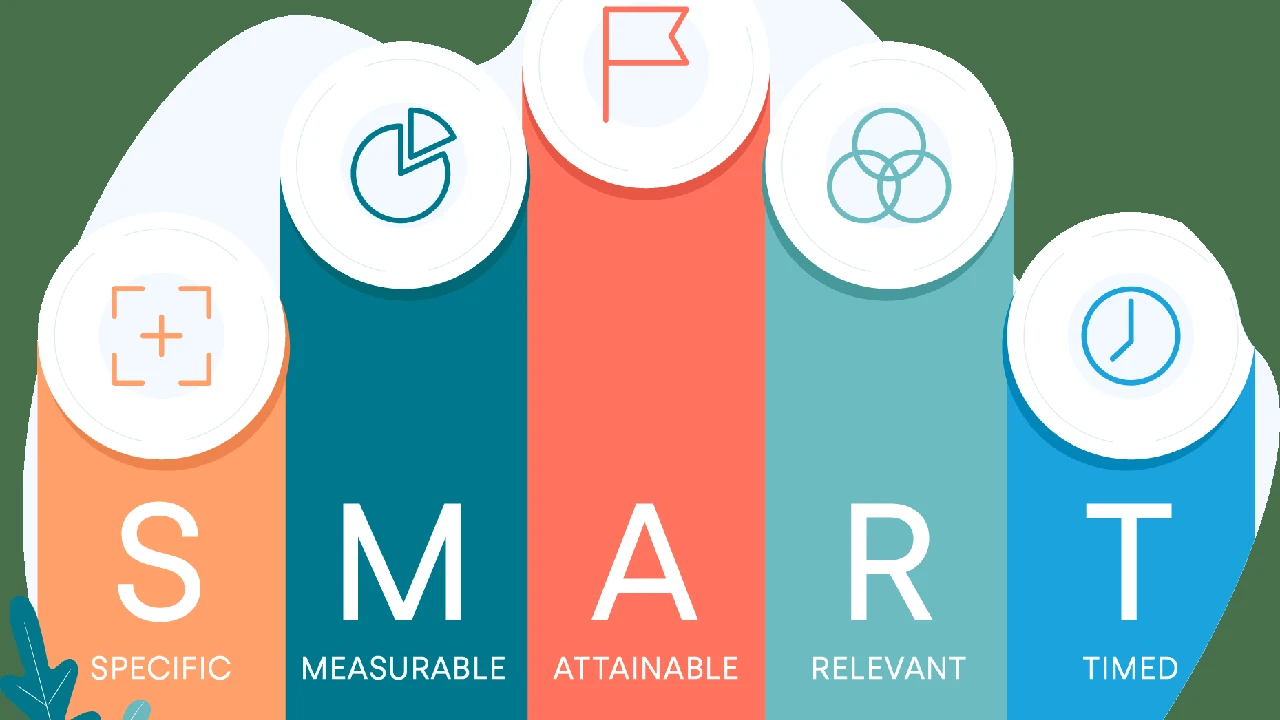
When it comes to setting impactful goals, the SMART framework is an indispensable tool. SMART stands for Specific, Measurable, Achievable, Relevant, and Time-bound. Let's break down each component and see how it applies to your business or side hustle.
Specific Goals Defining Your Business Objectives
Your goals should be precise and unambiguous. Instead of saying, 'I want to make more money,' a specific goal would be, 'I want to increase my online course sales by 20% in the next quarter.' This level of detail eliminates guesswork and provides a clear target. Consider the 'who, what, where, when, why, and which' questions when formulating your specific goals. Who is responsible? What exactly needs to be achieved? Where will this take place? When will it be completed? Why is this goal important? Which resources or limits are involved?
Measurable Goals Tracking Business Progress
If you can't measure it, you can't manage it. A measurable goal includes quantifiable metrics that allow you to track your progress and determine when the goal has been met. For instance, 'increase website traffic' is not measurable, but 'increase website traffic by 30% by the end of the year' is. Key Performance Indicators (KPIs) are crucial here. These are specific metrics that indicate the performance of your business activities. Examples include conversion rates, customer acquisition cost, average order value, social media engagement, or email open rates. Regularly reviewing these metrics will give you a clear picture of whether you're on track.
Achievable Goals Realistic Business Targets
While it's good to dream big, your goals must be realistic and attainable. Setting unachievable goals can lead to frustration and demotivation. An achievable goal considers your current resources, capabilities, and market conditions. This doesn't mean you shouldn't challenge yourself, but rather that your goals should be within the realm of possibility. For example, if you're a solo entrepreneur, aiming to launch five new products in a month might be unrealistic, whereas launching one well-researched product could be achievable. Conduct a realistic assessment of your time, budget, skills, and team capacity.
Relevant Goals Aligning with Business Vision
Your goals should align with your overall business vision and long-term objectives. Is this goal truly important to your business's success? Does it contribute to your larger mission? For example, if your business aims to be a leader in sustainable products, a goal to reduce packaging waste by 50% is highly relevant. Conversely, a goal that doesn't contribute to your core business values or strategic direction might be a distraction. Ensure your goals are meaningful and contribute directly to your desired future state.
Time-bound Goals Setting Business Deadlines
Every goal needs a deadline. A time-bound goal creates a sense of urgency and provides a target date for completion. Without a deadline, goals tend to get postponed indefinitely. 'Launch a new marketing campaign' is vague, but 'Launch a new email marketing campaign by October 31st' is time-bound. This also helps in breaking down larger goals into smaller, manageable tasks with their own mini-deadlines, making the entire process less daunting. Set realistic but firm deadlines to maintain momentum.
Practical Examples of SMART Goals for Side Hustles and Small Businesses
Let's look at some concrete examples across different business types:
E-commerce Business Goal Setting
* **Specific:** Increase average order value (AOV) for my online clothing store.
* **Measurable:** Increase AOV from $50 to $65.
* **Achievable:** By implementing product bundling and upselling strategies, which have shown success in similar businesses.
* **Relevant:** To boost overall revenue and profitability without solely relying on increasing traffic.
* **Time-bound:** By the end of Q4 (December 31st).
Freelance Service Provider Goal Setting
* **Specific:** Secure new long-term retainer clients for my graphic design services.
* **Measurable:** Acquire 2 new retainer clients with a minimum monthly budget of $1,000 each.
* **Achievable:** By actively networking, optimizing my portfolio, and sending out 10 personalized pitches per week.
* **Relevant:** To create a more stable and predictable income stream.
* **Time-bound:** Within the next 3 months.
Content Creator Goal Setting
* **Specific:** Grow my YouTube channel's subscriber count and engagement.
* **Measurable:** Reach 10,000 subscribers and achieve an average of 5% engagement rate per video.
* **Achievable:** By consistently publishing 2 high-quality videos per week, optimizing titles and descriptions for SEO, and actively engaging with comments.
* **Relevant:** To expand my audience, attract brand sponsorships, and establish myself as an authority in my niche.
* **Time-bound:** By June 30th of next year.
Breaking Down Big Goals into Actionable Steps for Entrepreneurs
Once you have your SMART goals, the next crucial step is to break them down into smaller, actionable tasks. This process, often called 'goal decomposition,' makes large goals less intimidating and provides a clear roadmap for execution. For example, if your goal is to 'Increase online course sales by 20% in the next quarter,' your actionable steps might include:
* **Week 1:** Research competitor pricing and marketing strategies.
* **Week 2:** Optimize existing course landing pages for conversion.
* **Week 3:** Develop a new email marketing sequence for abandoned carts.
* **Week 4:** Create new promotional content (e.g., short video ads, social media graphics).
* **Month 2:** Run targeted social media ad campaigns.
* **Month 3:** Host a free webinar to attract new leads.
Each of these smaller steps should also ideally be SMART, or at least have clear deadlines and responsibilities. This granular approach ensures consistent progress and allows for easier adjustments if needed.
Tools and Software for Business Goal Tracking and Management
Effective goal management often benefits from dedicated tools that help you organize, track, and visualize your progress. Here are some popular options, categorized by their primary use case, along with their typical pricing and features:
Project Management Software for Business Objectives
These tools are excellent for breaking down goals into tasks, assigning responsibilities, and tracking deadlines. They provide a centralized hub for your team (even if it's just you) to see what needs to be done and by when.
* **Asana:**
* **Description:** A versatile work management platform that helps teams organize, track, and manage their work. It's highly visual and offers various views (list, board, calendar, timeline).
* **Use Case:** Ideal for managing complex projects, editorial calendars, marketing campaigns, and product launches. You can create projects for each major goal and break them down into tasks and subtasks.
* **Pricing:** Free for basic use (up to 15 users). Premium plans start around $10.99/user/month (billed annually) for more advanced features like custom fields, timelines, and reporting.
* **Pros:** User-friendly interface, extensive integrations, robust task management, good for collaboration.
* **Cons:** Can become complex for very small teams, reporting features are more advanced in paid tiers.
* **Trello:**
* **Description:** A highly visual, Kanban-style project management tool that uses boards, lists, and cards to organize tasks. It's known for its simplicity and flexibility.
* **Use Case:** Perfect for managing content pipelines, sales funnels, personal to-do lists, or simple project tracking. Each goal can be a board, and tasks are cards moved across lists (e.g., 'To Do,' 'Doing,' 'Done').
* **Pricing:** Free for basic use. Standard plan starts at $5/user/month (billed annually) for unlimited boards, advanced checklists, and custom fields.
* **Pros:** Extremely easy to learn and use, highly visual, great for quick task management, good for solo entrepreneurs or small teams.
* **Cons:** Less robust for complex project dependencies, reporting is limited.
* **ClickUp:**
* **Description:** An all-in-one productivity platform that aims to replace multiple apps. It offers a vast array of features, including tasks, docs, chat, goals, and whiteboards.
* **Use Case:** Suitable for businesses that want to consolidate their tools. Its 'Goals' feature is specifically designed for setting and tracking objectives, linking them directly to tasks.
* **Pricing:** Free for personal use. Unlimited plan starts at $7/user/month (billed annually) for unlimited storage, integrations, and advanced features.
* **Pros:** Highly customizable, feature-rich, dedicated 'Goals' functionality, good value for money.
* **Cons:** Can have a steep learning curve due to the sheer number of features, some users find it overwhelming initially.
CRM Software for Sales and Customer Goals
If your goals involve sales, customer acquisition, or customer retention, a Customer Relationship Management (CRM) system is invaluable.
* **HubSpot CRM:**
* **Description:** A comprehensive CRM platform that offers tools for sales, marketing, customer service, and content management. Its free tier is surprisingly robust.
* **Use Case:** Tracking sales pipelines, managing leads, automating email sequences, and monitoring customer interactions. You can set sales targets and track progress directly within the CRM.
* **Pricing:** Free for basic CRM features. Paid 'Starter' plans for Sales Hub, Marketing Hub, etc., begin around $20/month (billed annually) for more advanced automation and reporting.
* **Pros:** Excellent free tier, user-friendly, integrates marketing and sales, good for small to medium businesses.
* **Cons:** Paid tiers can become expensive as you scale, some advanced features are locked behind higher plans.
* **Zoho CRM:**
* **Description:** Part of the larger Zoho ecosystem, Zoho CRM provides tools for lead management, sales automation, contact management, and analytics.
* **Use Case:** Managing customer relationships, tracking sales performance against targets, and automating follow-ups. Good for businesses looking for an affordable, scalable CRM solution.
* **Pricing:** Free for up to 3 users. Paid plans start at around $14/user/month (billed annually) for more features like custom reports and advanced automation.
* **Pros:** Affordable, feature-rich for its price point, good for small to medium businesses, integrates well with other Zoho products.
* **Cons:** Interface can feel a bit dated compared to some competitors, learning curve for advanced features.
Financial Tracking Tools for Revenue and Profit Goals
To track financial goals like revenue growth or profit margins, dedicated accounting or budgeting software is essential.
* **QuickBooks Online:**
* **Description:** A leading cloud-based accounting software for small businesses. It helps manage income, expenses, invoices, and financial reports.
* **Use Case:** Tracking revenue against targets, monitoring expenses, generating profit and loss statements, and understanding your business's financial health. Essential for any business with financial goals.
* **Pricing:** Starts around $30/month for the Simple Start plan (often discounted for new users).
* **Pros:** Industry standard, comprehensive accounting features, good reporting, integrates with many other business tools.
* **Cons:** Can be more expensive than basic budgeting tools, some features might be overkill for very small side hustles.
* **Wave Accounting:**
* **Description:** A free cloud-based accounting software designed for small businesses, freelancers, and entrepreneurs. It offers invoicing, accounting, and receipt scanning.
* **Use Case:** Tracking income and expenses, sending invoices, and generating basic financial reports to monitor revenue goals. Excellent for side hustles or very small businesses on a budget.
* **Pricing:** Free for accounting, invoicing, and receipt scanning. Paid services for payroll and payment processing.
* **Pros:** Completely free for core accounting features, user-friendly, good for basic financial tracking.
* **Cons:** Limited reporting compared to paid solutions, customer support can be slower due to free model.
Mind Mapping and Brainstorming Tools for Goal Visualization
Sometimes, just visualizing your goals and the steps to achieve them can be incredibly helpful.
* **Miro:**
* **Description:** An online collaborative whiteboard platform that allows teams to brainstorm, plan, and visualize ideas. It supports various templates, including mind maps, flowcharts, and Kanban boards.
* **Use Case:** Brainstorming initial goal ideas, mapping out dependencies between different goals, creating visual roadmaps for your business. Great for solo planning or team collaboration.
* **Pricing:** Free for up to 3 editable boards. Starter plan begins at $8/user/month (billed annually) for unlimited boards and advanced features.
* **Pros:** Highly versatile, excellent for visual thinkers, great for collaboration and remote teams, intuitive interface.
* **Cons:** Can be overwhelming with too many features for simple tasks, free plan is somewhat limited.
* **XMind:**
* **Description:** A popular mind mapping software that helps organize thoughts, brainstorm ideas, and plan projects. Available for desktop and mobile.
* **Use Case:** Structuring your goals hierarchically, breaking down complex objectives into smaller components, and visualizing the relationships between different tasks and sub-goals.
* **Pricing:** Free basic version. XMind Pro starts around $39.99 for 6 months or $59.99 for a year for advanced features like Gantt charts and presentation mode.
* **Pros:** Clean interface, powerful mind mapping features, good for individual planning, cross-platform availability.
* **Cons:** Free version has limited export options, primarily a desktop application.
Regular Review and Adjustment of Business Goals
Setting goals is not a one-time event; it's an ongoing process. Regularly reviewing your progress is critical to staying on track and making necessary adjustments. Life happens, market conditions change, and your business might evolve. A quarterly or monthly review is often ideal for most businesses. During these reviews, ask yourself:
* Am I still on track to meet my goals?
* What progress have I made?
* What challenges have I encountered?
* Are my goals still relevant to my business vision?
* Do I need to adjust my strategies or even the goals themselves?
Don't be afraid to pivot. If a goal is no longer serving your business or has become unrealistic due to unforeseen circumstances, it's better to adjust it than to stubbornly pursue something that's no longer viable. This flexibility is a hallmark of successful entrepreneurs. Use the data from your tracking tools to inform these decisions. If a marketing campaign isn't yielding the expected results, analyze why and adjust your approach rather than abandoning the goal entirely.
Maintaining Motivation and Accountability for Business Success
Achieving goals, especially ambitious ones, requires sustained motivation and accountability. Here are some strategies:
* **Celebrate Small Wins:** Acknowledge and celebrate every milestone you hit, no matter how small. This reinforces positive behavior and keeps you motivated.
* **Visualize Success:** Regularly visualize yourself achieving your goals. This mental rehearsal can boost confidence and keep your focus sharp.
* **Find an Accountability Partner:** Share your goals with a trusted friend, mentor, or fellow entrepreneur. Regular check-ins can provide external motivation and keep you committed.
* **Reward Yourself:** Set up small, non-monetary rewards for achieving certain milestones. This could be anything from a favorite meal to a short break.
* **Stay Flexible:** While deadlines are important, understand that unforeseen circumstances can arise. Be prepared to adjust your timeline or approach without losing sight of the ultimate objective.
* **Learn from Setbacks:** Not every plan will go perfectly. View setbacks as learning opportunities rather than failures. Analyze what went wrong, adjust your strategy, and move forward.
By diligently applying the SMART framework, breaking down your goals, leveraging appropriate tools, and maintaining a consistent review process, you'll significantly increase your chances of achieving your business and side hustle aspirations. Remember, success is not just about setting goals, but about the consistent, disciplined effort you put into achieving them.
:max_bytes(150000):strip_icc()/277019-baked-pork-chops-with-cream-of-mushroom-soup-DDMFS-beauty-4x3-BG-7505-5762b731cf30447d9cbbbbbf387beafa.jpg)