Comparing Certifications vs Degrees for Career Boost
Understand the pros and cons of certifications versus traditional degrees for accelerating your career.
Understand the pros and cons of certifications versus traditional degrees for accelerating your career.
Comparing Certifications vs Degrees for Career Boost
So, you're looking to give your career a serious boost, right? You've probably heard a lot about getting a degree, but what about certifications? In today's fast-paced job market, it's not always clear which path is the best one. Let's dive deep into the world of certifications versus traditional degrees, exploring their benefits, drawbacks, and when each might be your best bet. We'll also look at some specific examples, costs, and how they play out in real-world scenarios, especially for folks in the US and Southeast Asia.
Degrees The Traditional Path to Career Advancement
For decades, a university degree has been the gold standard. Think about it: a Bachelor's, Master's, or even a Ph.D. These are comprehensive programs designed to give you a broad understanding of a subject, critical thinking skills, and a strong theoretical foundation. They often involve years of study, extensive coursework, and a significant financial investment.
Benefits of a Traditional Degree
- Broad Knowledge Base and Foundational Skills: Degrees provide a holistic education. You don't just learn about one specific tool or technique; you learn the underlying principles. This can be incredibly valuable for long-term career growth, especially if you plan to move into management or leadership roles where a wider perspective is needed.
- Networking Opportunities and Alumni Connections: Universities are hubs for networking. You'll meet professors, guest speakers, and, most importantly, fellow students who will become your professional network. The alumni network of a reputable university can open doors throughout your career.
- Employer Recognition and Credibility: Many employers, especially in established industries, still view a degree as a baseline requirement. It signals a certain level of commitment, discipline, and intellectual capability. For some professions, like medicine or law, a degree is non-negotiable.
- Personal Growth and Soft Skills Development: Beyond academics, university life fosters personal growth. You learn time management, problem-solving, teamwork, and communication skills – all crucial soft skills that employers highly value.
Drawbacks of a Traditional Degree
- High Cost and Student Debt: Let's be real, university education is expensive. Tuition fees, living expenses, books – it all adds up. Many graduates face significant student loan debt, which can impact their financial freedom for years. For example, a four-year Bachelor's degree in the US can easily cost upwards of $100,000, and even more for private institutions or graduate programs. In Southeast Asia, while generally less expensive, top universities still represent a substantial investment.
- Time Commitment and Delayed Entry to Workforce: A typical Bachelor's degree takes four years, and a Master's adds another one to two. That's a lot of time you're not earning a full-time salary or gaining practical work experience.
- Curriculum Can Be Outdated: In rapidly evolving fields like technology, a university curriculum might struggle to keep pace with the latest industry trends and tools. What you learn in your first year might be somewhat obsolete by the time you graduate.
- Less Specialization in Niche Areas: While broad knowledge is good, degrees often don't delve into highly specialized, niche skills that are in high demand in certain industries.
Certifications The Agile Approach to Skill Acquisition
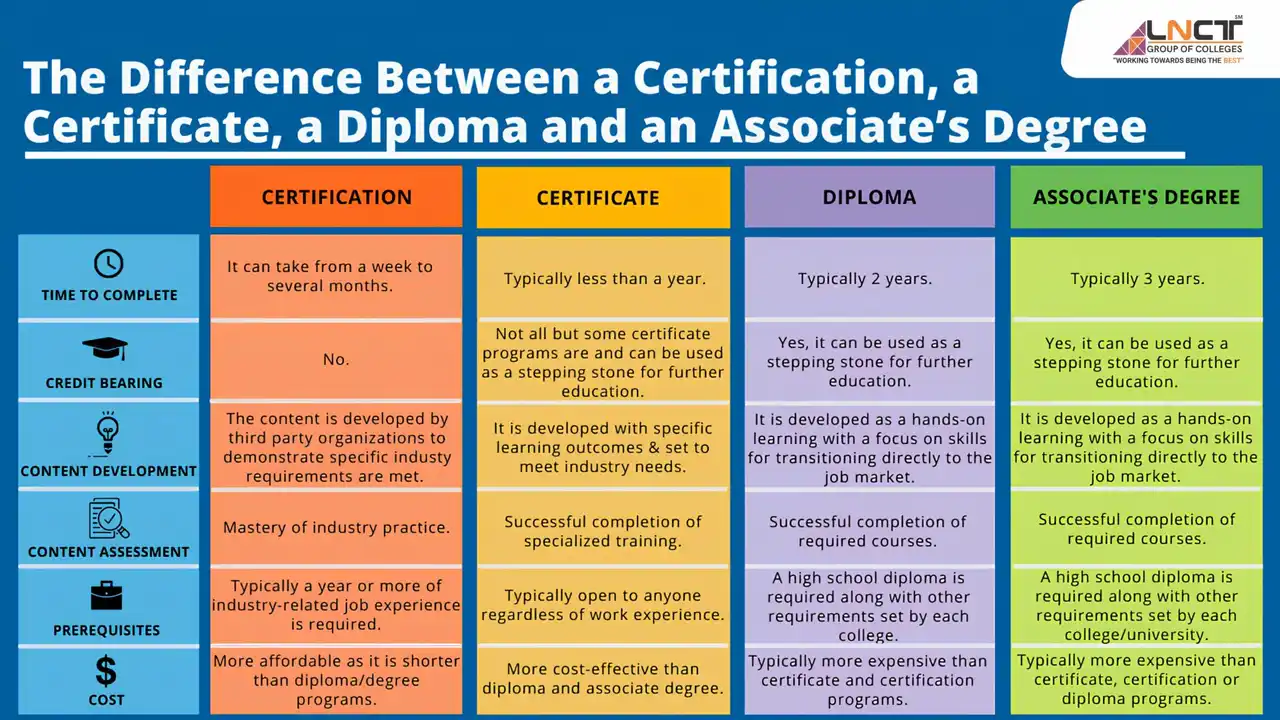
Certifications are different. They're typically shorter, more focused programs designed to validate specific skills or knowledge in a particular area. Think of them as badges that prove you've mastered a certain tool, technology, or methodology. They're often offered by industry associations, software vendors, or specialized training providers.
Benefits of a Certification
- Faster Skill Acquisition and Immediate Application: Certifications are all about getting you job-ready quickly. You learn exactly what you need to know for a specific role or task, and you can often apply that knowledge immediately in the workplace.
- Lower Cost and Higher ROI: Compared to a degree, certifications are significantly cheaper. You might pay a few hundred to a few thousand dollars, which is a fraction of university tuition. This means a quicker return on your investment.
- Industry Relevance and Up-to-Date Knowledge: Certification bodies are usually very responsive to industry changes. They update their exams and course materials regularly to reflect the latest technologies and best practices. This is a huge plus in tech, marketing, or project management.
- Targeted Skill Validation for Specific Roles: If a job description asks for a 'PMP certification' or 'AWS Certified Solutions Architect,' having that specific certification tells the employer you have the exact skills they're looking for.
- Flexibility and Online Learning Options: Many certifications can be earned online, at your own pace, making them ideal for working professionals or those with busy schedules.
Drawbacks of a Certification
- Lack of Broad Foundational Knowledge: While great for specific skills, certifications don't provide the same broad theoretical understanding as a degree. This can sometimes limit long-term career mobility if you need to pivot to a completely different area.
- Varying Levels of Recognition and Quality: Not all certifications are created equal. Some are highly respected industry standards, while others might be less recognized or even seen as 'paper certifications' if not backed by practical experience.
- May Require Prior Experience: Many advanced certifications assume you already have a certain level of professional experience in the field. For example, to sit for the PMP exam, you need thousands of hours of project management experience.
- Can Become Obsolete Quickly: In rapidly changing fields, a certification might need to be renewed or updated frequently to remain relevant. What's hot today might be old news in a few years.
When to Choose a Degree vs. a Certification
Choose a Degree If:
- You're just starting your career and want a comprehensive education.
- Your desired profession (e.g., doctor, lawyer, engineer in some countries) legally requires a degree.
- You're aiming for leadership or management roles that require a broad understanding of business or a field.
- You value the traditional university experience, networking, and personal development.
- You're entering a field where theoretical knowledge and research are paramount.
Choose a Certification If:
- You need to quickly acquire specific, in-demand skills for a particular job role.
- You're already working and want to upskill or reskill to advance in your current career or pivot to a related one.
- You're looking for a cost-effective and time-efficient way to boost your resume.
- You're in a rapidly evolving industry (like IT, digital marketing, cybersecurity) where staying current is crucial.
- You want to validate your existing skills and experience with an industry-recognized credential.
Hybrid Approach The Best of Both Worlds
Often, the most effective strategy is a hybrid approach. Many professionals pursue a degree for foundational knowledge and then layer on certifications to gain specialized skills and stay current. For example, someone with a Computer Science degree might get an AWS certification to specialize in cloud computing, or a Business Administration graduate might pursue a Google Ads certification to move into digital marketing.
Specific Certification Examples Costs and Use Cases
Let's get into some concrete examples of popular certifications, their typical costs, and who they're best for. Keep in mind that costs can vary based on location, training providers, and whether you include study materials.
Project Management Professional PMP
- Overview: The PMP certification, offered by the Project Management Institute (PMI), is globally recognized and highly respected for project managers. It validates your experience and competency in leading and directing projects.
- Use Case: Ideal for experienced project managers looking to formalize their skills, increase their earning potential, and take on larger, more complex projects. It's a must-have for many senior project management roles.
- Typical Cost: Exam fee is around $555 (non-PMI members) or $405 (PMI members). You'll also need to factor in costs for PMP exam prep courses (which are often required to meet the 35 hours of project management education), which can range from $500 to $2,000+.
- Target Audience: Project managers with at least three years of experience (or five years without a Bachelor's degree).
AWS Certified Solutions Architect Associate
- Overview: This certification from Amazon Web Services (AWS) validates your ability to design and deploy scalable, highly available, and fault-tolerant systems on the AWS platform.
- Use Case: Perfect for IT professionals, developers, and system administrators looking to specialize in cloud computing, which is a massive growth area globally. It's a stepping stone to more advanced AWS certifications.
- Typical Cost: Exam fee is $150. Training courses and practice exams can add another $200 to $1,000, depending on the provider (e.g., A Cloud Guru, Udemy, official AWS training).
- Target Audience: Individuals with at least one year of hands-on experience with AWS.
Google Digital Marketing & E-commerce Professional Certificate
- Overview: Offered through Coursera, this professional certificate covers key aspects of digital marketing and e-commerce, including SEO, SEM, social media marketing, email marketing, and analytics.
- Use Case: Excellent for individuals looking to enter the digital marketing field, small business owners, or traditional marketers wanting to upskill in digital channels.
- Typical Cost: Subscription to Coursera Plus is around $59/month. The program typically takes about 6-8 months to complete, so expect to pay around $350-$470.
- Target Audience: Beginners with no prior experience in digital marketing.
CompTIA Security+
- Overview: A foundational cybersecurity certification that validates core knowledge and skills required for an entry-level cybersecurity role. It covers network security, threats, vulnerabilities, and compliance.
- Use Case: A great starting point for anyone interested in a career in cybersecurity. It's often a prerequisite for more advanced security roles and is recognized by many government agencies.
- Typical Cost: Exam voucher is around $392. Study materials, online courses (e.g., Professor Messer, Jason Dion on Udemy), and practice tests can add another $100-$500.
- Target Audience: Individuals with some IT experience, looking to specialize in cybersecurity.
Certified Public Accountant CPA
- Overview: While technically a license, the CPA is often considered a certification in the accounting world. It's a rigorous exam that validates expertise in accounting principles, auditing, business law, and taxation.
- Use Case: Essential for anyone wanting to work as a public accountant, sign audit reports, or hold certain financial leadership positions. It significantly boosts credibility and earning potential in finance and accounting.
- Typical Cost: Exam fees vary by state but can be around $900-$1,000 for all four parts. CPA review courses (e.g., Becker, Wiley CPAexcel) are a significant investment, often ranging from $2,000 to $4,000+.
- Target Audience: Accounting graduates with specific educational and experience requirements (varies by state).
Comparing Specific Products and Platforms for Learning
When it comes to actually getting these certifications or even supplementing your degree, there are tons of platforms out there. Let's compare a few popular ones:
Coursera vs. Udemy vs. edX for Online Learning
- Coursera:
- Overview: Partners with universities and companies to offer courses, specializations, and professional certificates. Many programs are part of a subscription model (Coursera Plus).
- Pros: High-quality content, often university-backed, structured learning paths, professional certificates from reputable institutions (like Google, IBM).
- Cons: Can be more expensive than other platforms if you're not using Coursera Plus for multiple courses.
- Typical Cost: Individual courses can be $49-$99. Specializations/Professional Certificates often require a monthly subscription ($39-$59/month).
- Use Case: Great for structured learning, professional development, and earning recognized certificates from top universities or companies.
- Udemy:
- Overview: A massive open online course (MOOC) provider with a huge library of courses taught by independent instructors.
- Pros: Extremely affordable (especially during sales), wide variety of topics, practical and hands-on content, lifetime access to purchased courses.
- Cons: Quality can vary significantly between instructors, not all courses lead to recognized certifications.
- Typical Cost: Courses typically range from $10-$200, but are frequently on sale for $10-$20.
- Use Case: Excellent for learning specific software, programming languages, or practical skills quickly and affordably. Good for supplementing formal education.
- edX:
- Overview: Founded by Harvard and MIT, edX offers university-level courses and programs, including MicroBachelors and MicroMasters programs, and professional certificates.
- Pros: High academic rigor, courses from top global universities, pathways to university credit.
- Cons: Can be more academically focused, less 'hands-on' for some practical skills, some programs are quite expensive.
- Typical Cost: Many courses can be audited for free. Verified certificates range from $50-$300. Professional programs can be $500-$2,000+.
- Use Case: Ideal for those seeking academic-level learning, exploring university subjects, or pursuing pathways to higher education.
Specialized Training Providers
Beyond general MOOC platforms, many certifications have dedicated training providers:
- PMI.org (for PMP): The official source for PMP information, resources, and often offers its own training or lists authorized training partners.
- A Cloud Guru / Cloud Academy (for AWS, Azure, GCP): These platforms specialize in cloud computing training, offering comprehensive courses, labs, and practice exams specifically designed for cloud certifications. They often have subscription models.
- (ISC)² / CompTIA (for Cybersecurity): These organizations are the creators of the certifications themselves and provide official study guides, practice tests, and sometimes direct training.
The Southeast Asia Context Degrees vs Certifications
In Southeast Asia, the landscape for degrees and certifications has some unique nuances:
- Strong Emphasis on Degrees: Traditional degrees from reputable local or international universities still hold significant weight in many Southeast Asian countries. Family and societal expectations often push for a university education.
- Growing Recognition of Certifications: However, with the rapid growth of tech, digital industries, and the gig economy, certifications are gaining immense traction. Employers, especially in tech hubs like Singapore, Kuala Lumpur, and Jakarta, are increasingly valuing specific, job-ready skills validated by certifications.
- Cost-Effectiveness is Key: Given varying income levels, the lower cost and quicker ROI of certifications make them very attractive for upskilling and reskilling, especially for those who can't afford a full university degree or need to enter the workforce quickly.
- Government Initiatives: Many Southeast Asian governments (e.g., Singapore's SkillsFuture, Malaysia's HRD Corp) have initiatives to subsidize or promote skill development through certifications, recognizing their importance for economic competitiveness.
- English Proficiency: For many global certifications, English proficiency is crucial, as most exam materials and training are in English. This can be an advantage for those in the region with strong English skills.
Final Thoughts on Your Career Boost
Ultimately, the choice between a degree and a certification isn't an either/or situation. It's about understanding your career goals, your current situation, and the demands of your chosen industry. For some, a degree provides the essential foundation and broad opportunities. For others, certifications offer the agility and targeted skills needed to thrive in specialized, fast-moving fields. Many successful professionals leverage both, building a robust educational and skill portfolio that makes them highly competitive in the global job market. So, whether you're just starting out or looking to level up, consider how both degrees and certifications can play a role in accelerating your career journey.
:max_bytes(150000):strip_icc()/277019-baked-pork-chops-with-cream-of-mushroom-soup-DDMFS-beauty-4x3-BG-7505-5762b731cf30447d9cbbbbbf387beafa.jpg)